Blog Article

What Services Do General Contractors Provide?

Summary: General contracting for trade shows and events is all about execution. It includes managing labor, logistics, mounting and dismantling, overseeing the vendors, and providing support at the site. By controlling the physical construction as well as the timelines, the general contractors make sure that the plans that are approved are done so in a manner that is safe, efficient, and compliant with the requirements of the venue.

People often get the wrong idea about general contracting, especially in the case of trade shows, events, and brand activations. A lot of people view it as dealing with design, creative planning, or strategy at the top level. General contracting, however, is all about putting the plan into action. It represents the actual construction of a livable and usable area based on the approved plans.

In the case of live events and trade shows, the general contracting is mainly concerned with coordination, manpower, logistics, infrastructure, and on-site delivery. It is not related to branding, communication, or event conceptualization at all. Those choices are usually made by planners, agencies, or internal brand teams. The contractor’s role starts only after those choices have been made.

This guide explains general contracting services through an event and activation execution lens. It outlines what general contractors do on site, how they support complex environments, and why disciplined execution is critical to a successful show.

What Is a General Contractor?

The general contractor is the individual in charge of directing and carrying out the physical aspects of a given project. They supervise the manner in which the labor is done, but they do not get involved in the artistic interpretation of the work.

In events and trade shows, a general contractor:

  • Works from approved plans and layouts
  • Coordinates labor, vendors, and schedules
  • Oversees installation and dismantling
  • Manages logistics and site compliance
  • Ensures everything is built safely and on time

A general contractor performs a different role than a designer, planner, or agency. Designers determine the appearance of a place. Planners coordinate the programming, schedules, and guest experience. Agencies are responsible for the overall direction and communication. The general contractor builds the physical environment that the entire team defines.

In the case of complicated projects, the general contractor is the central figure of the execution. If this structure is missing, there will be delays in timelines, conflicts between vendors, and onsite problems will escalate rapidly.

What Does General Contracting Entail?

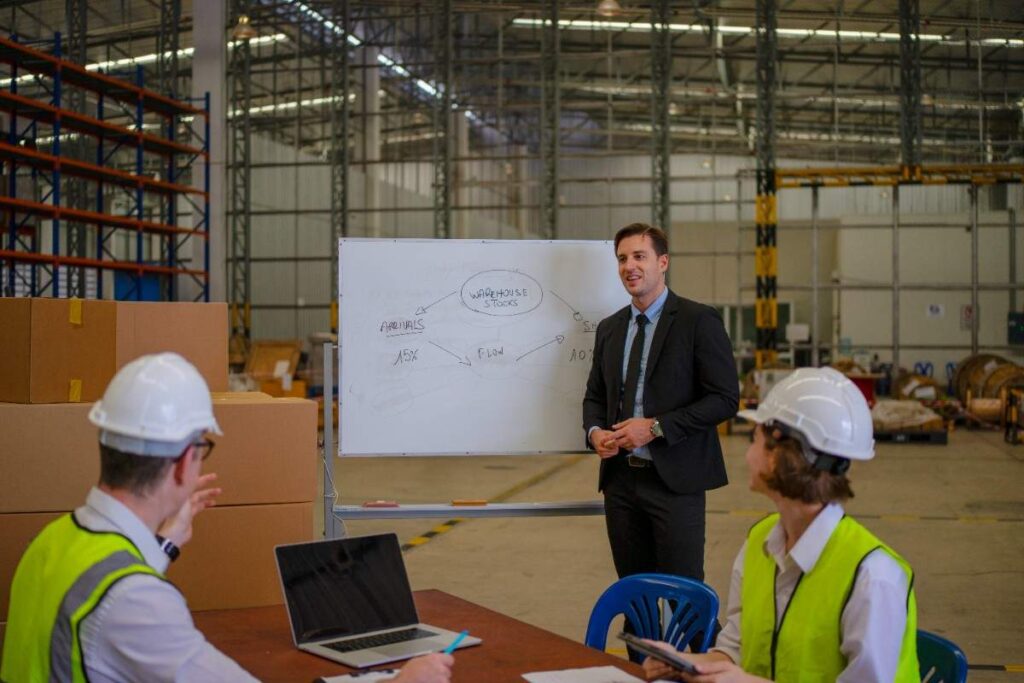
people standing holding construction cap

What is general contracting in live environments? It is basically about control, coordination, and accountability. The general contractor manages all the moving parts that make it possible for an event or trade show to go as planned.

Project Coordination and Oversight

General contractors control timelines, scopes, and approved plans. This means that they also track the necessary things, the timing, and the person in charge of each task.

They keep the sequence by performing the work through coordinating different trades and vendors. This prevents the occurrence of conflicts, delays, and rework. On a live show floor, timing is of utmost importance. Missed windows can affect the whole schedule.

Oversight also comes with the necessity of remaining in line with venue rules and show management requirements. General contractors work within those limits and ensure that the execution is still compliant.

Labor Management and Supervision

Labor is one of the most critical components of general contracting. Skilled labor must be scheduled correctly, supervised on-site, and aligned with the project scope.

  • General contractors handle:
  • Labor scheduling and crew sizing
  • Assigning supervisors and site managers
  • Monitoring productivity and quality
  • Maintaining accountability on the floor

Supervision guarantees that the work is done safely and in accordance with the plan. It also enables prompt resolution of problems before they have an impact on the larger project.

Logistics and Infrastructure Execution

Behind every successful event is a layer of logistics most attendees never see. General contractors manage these operational elements so the environment functions smoothly.

This includes staging materials, coordinating deliveries, planning access routes, and supporting infrastructure needs. Without this execution layer, even well-planned events struggle to come together on site.

two man shaking hands

What Services Do General Contractors Offer in Events and Trade Shows?

General contracting services in live environments are focused on physical execution. Below are the core services typically provided.

Site Planning and Show Infrastructure

General contractors create floor plans by taking the approved layouts as the basis. The plans integrate such real-life constraints as access points, fire lanes, ceiling heights, and venue rules.

Planning of infrastructures consists of power access coordination, planning for build zones, and management of move-in flow. Although power and rigging are frequently carried out by specialized vendors, the general contractor schedules how and when that work happens in connection with the overall timeline.

Installation and Dismantle (I&D)

Installation and dismantling, often referred to as I&D, is a core part of general contracting. This includes assembling event environments during move-in and breaking them down during move-out.

General contractors manage:

  • Crew scheduling for install and teardown
  • Sequencing work within limited time windows
  • Adjusting plans as site conditions change

Trade shows and events operate on strict schedules. General contractors are used to working within those limits and keeping execution moving.

Material Handling and Drayage Coordination

Material handling is the process of transferring goods from the loading docks to the event floor and vice versa. Drayage coordination is responsible for making sure that the materials are staged correctly and delivered in the right order.

General contractors coordinate:

  • Freight timing and sequencing
  • Storage and staging areas
  • Venue compliance for material movement

This helps prevent congestion, delays, and misplaced assets during busy move-in periods.

Third-Party Vendor Management

 Live events involve many specialized vendors, including AV, electrical, and rigging teams. While these vendors perform their own scopes, the general contractor acts as the central execution point.
This coordination ensures:
  • Vendors work in the correct order
  • Access conflicts are minimized
  • Issues are resolved quickly on-site
Without centralized coordination, vendor overlap can create delays and safety concerns

On-Site Show Management Support

In the case of live events, the general contractors are the ones who support the event in the background. They keep an eye on the situation, solve the problems that come up, and keep the process going smoothly.
This involves dealing with changes that are made at the last minute, rearranging the times, and getting things done all at the same time without interfering with the experience of the event.

Types of General Contractors

Not all general contractors operate in the same space. Understanding the differences helps clarify where event-focused general contracting fits.

Construction General Contractors

Construction general contractors manage building and structural projects. Their work involves long timelines, permits, and permanent structures.
This is not the focus of Willwork’s services

Specialty Trade Contractors

 Specialty contractors focus on a single trade, such as electrical or carpentry. They operate within a defined scope rather than managing an entire project

Event and Trade Show General Contractors

 Event and trade show general contractors focus on live environments. Their work is execution-driven and time-sensitive.

They manage:

  • Labor
  • Logistics
  • Infrastructure
  • On-site coordination

This is where Willwork operates, supporting exhibitors, brands, and event environments.

Why Hire a General Contractor for Trade Shows and Events?

Centralized Execution Control

Live events consist of multiple elements that are continuously changing. A general contractor is in charge of the whole execution and provides a single point of accountability for the project.

This not only minimizes misunderstandings but also enhances the flow of information and ensures that the work remains in line with the master plan of the project in terms of timing.

Efficiency Under Tight Timelines

 Trade shows and events are constantly under pressure due to short time frames. Loading in and out times are mostly measured by hours instead of days.

General contractors have the know-how of working in such situations and thus are able to keep the projects on schedule.

Risk Reduction and Compliance

 Venues have strict rules regarding labor, safety, and access. General contractors understand these requirements and ensure work complies with them.

This reduces risk for exhibitors and event organizers.

How Willwork Delivers General Contracting Services

Willwork delivers general contracting services with an execution-first approach. The focus is on physical delivery, not creative ownership or planning control.

Willwork provides:

  • Nationwide labor coverage
  • Trained crews through Willwork University
  • Experience managing large-scale events and activations
  • Coordination across labor, logistics, and on-site execution

Willwork collaborates closely with event planners, agencies, and exhibitors, executing approved plans while staying within venue and show guidelines.

Choosing the Right General Contractor

When selecting a general contractor for events, look for partners who understand execution discipline.

Key factors include:

  • Proven event and trade show experience
  • Skilled, supervised labor
  • Clear processes and communication
  • Ability to scale across locations and shows

Avoid partners who blur execution with creative or planning roles. Clear boundaries lead to smoother projects

Conclusion: A Leader’s Perspective

General contracting in live environments is about making things work on site. It is the discipline that holds complex projects together under real-world constraints.
Successful trade shows and events depend on coordinated labor, controlled logistics, and reliable execution. With the right general contracting partner, brands and organizers can focus on their objectives while execution teams handle the physical delivery. The global event services market continues steady growth, reflecting sustained investment in live, in-person experiences.
Willwork acts as that execution partner, bringing structure, consistency, and on-site expertise to events across the country.

FAQs

Coordinating labor, logistics, infrastructure, and on-site execution based on approved plans.

Installation and dismantling, labor supervision, material handling coordination, vendor management, and on-site support.

No. General contractors handle execution. Planners and agencies handle strategy and creativity.

Construction general contractors, specialty trade contractors, and event or trade show general contractors.

By acting as an execution partner, managing labor, logistics, and on-site delivery for events and brand activations.

REQUEST FOR PROPOSAL

Ready to bring your vision to life? Let Willwork handle every detail with precision and care. Fill out the form below to submit your RFP, and our dedicated team will connect with you promptly to discuss how we can make your project a success. Let’s create something extraordinary together!