
Blog Article
Summary: Audio-visual production is at the top of the activity of experiencing modern events. Whether it is executive meetings or huge trade shows, the sound, visual, and lighting quality influence how people interact with the content. This guide describes what audio-visual production involves, the contribution of the AV industry to events, and what it requires to plan and install dependable AV systems. The focus is practical. All of it includes equipment, workflows, common challenges, and best practices that are deployed by professional event teams. |
Every event offers an experience through critical elements: sound, sight, and timing. The people may not remember what kind of equipment was used, but they will remember when the audio drops out, the screens go dark, or transitions stall. Audio-visual production exists to prevent those particular moments from occurring.
More than hardware, understanding audio-visual production means understanding system interactions, labor coordination, and the influence of environments on performance. It reduces risk and improves outcomes for event teams, exhibitors, and planners alike, while the AV audio-visual Industry provides the tools. Execution will determine whether those tools perform when it matters.
Audio-visual production in events refers to the planning, installation, operation, and management of audio, video, lighting, and control systems in a live environment. The process enables organizations to communicate their message while developing their brand identity and creating ways for people to interact with their content.
In corporate and trade shows, audio-visual productions have to work with specific schedules and space constraints. In other words, this means that apart from technology, planning and coordination are equally important.
Audio-visual production relies on multiple systems working together under show conditions.
Audio systems include microphones, speakers, mixers, amplifiers, and processing equipment. The systems need to consider room acoustics, audience size, ambient noise, and presenter movement. The design of audio systems will fail when it produces feedback, creates inconsistent sound distribution, and makes speech difficult to understand.
Lighting aids visibility, mood, and concentration. At corporate events, lighting must be properly balanced between stage lighting, natural lighting, and color reproduction of the event’s colors. If lighting is not correct, both the audience’s perception and the camera’s performance are compromised.
Lighting supports visibility, mood, and focus. In corporate events, lighting must balance stage illumination, ambient light, and brand color accuracy. Improper lighting affects both audience perception and camera performance.
Control systems bring all elements, like audio, video, and lighting, into one operational chain. Operations like signal routing, cue management, and redundancy planning are done here. The integration is what moves these systems into action rather than keeping them separate.
The audience receives a continuous experience when the elements undergo successful installation and testing. The system fails immediately when the elements do not function as intended.
The AV industry functions as multiple service categories because it consists of different roles, standards, and workflows that enable live operations.
The AV industry requires teams to understand its complete scope because this knowledge allows them to create accurate project plans and establish effective communication with their technical partners.The team is responsible for the design of systems, the coordination of equipment, and the management of both labor and the execution of site-based activities. The team translates event goals into specific technical requirements.
Rental partners offer various equipment, such as audio, video, and control gear. The equipment provided depends on various factors, including environment and duration of use.
Integrators configure systems and manage signal flow. Operators run shows in real time, handling cues, transitions, and troubleshooting.
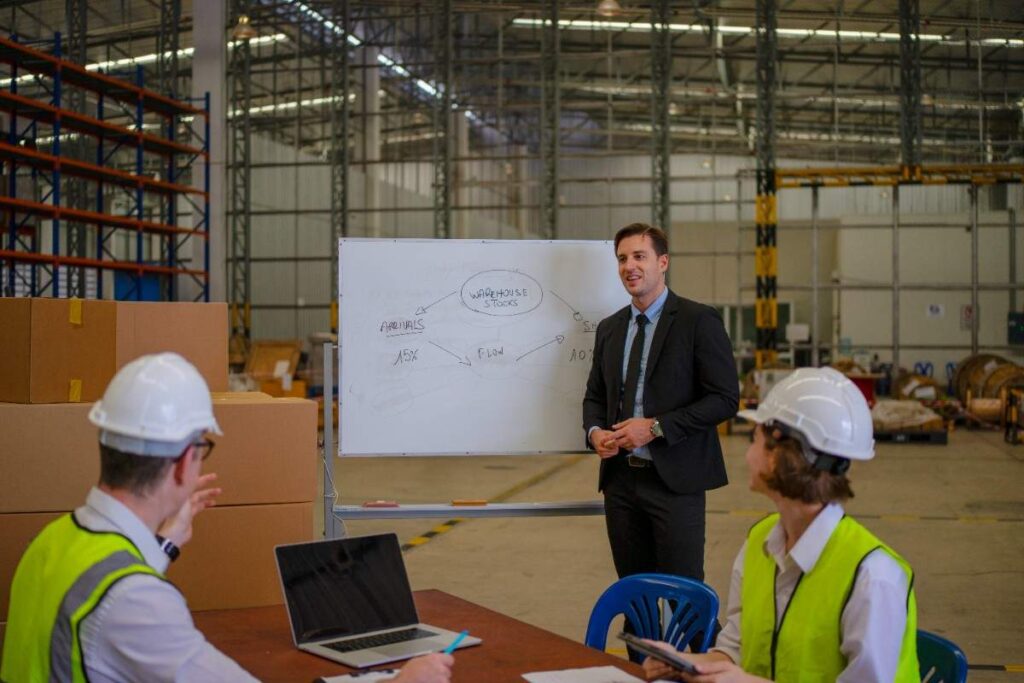
Planners and exhibitors who understand AV workflows reduce friction. Clear schedules, accurate layouts, and early coordination prevent conflicts during load-in.
Industry standards outlined in documents by AVIXA refer to the trend of fully integrated AV systems, with more than 70 percent of professional event setups utilizing centralized control as opposed to individual components.
Effective audio-visual production begins well before equipment arrives onsite. Planning follows a structured sequence designed to reduce risk and avoid last-minute compromises.
The first step is understanding the event environment.
Skipping this step often leads to underpowered systems or visibility issues that cannot be corrected onsite.
Equipment must be selected based on function, not preference.
Power draw, cabling paths, and rigging loads are documented during this phase.
Integration connects systems into a unified workflow.
This phase is where most failures are prevented, not fixed.
Rehearsal confirms that planning holds up under real conditions.
Most AV failures are not technical. They result from planning and coordination gaps.
Equipment malfunctions often trace back to inadequate testing or power planning. Signal loss, interference, and overheating are common when systems are pushed beyond design limits.
Missed cues, miscommunication between operators, or incompatible presentation files are examples of disruptions. Leadership and standardization of workflow are essential.
Acoustics in rooms cause echo problems and areas of “deadness.” Lighting causes glare, which can prevent the viewer from seeing the screen. Outdoor venues bring weather and temperature problems if the equipment does not protect the speakers from them.
Limited load-in windows, shared docks, or last-minute layout changes compress setup time. Cable management issues create safety risks and signal problems.
Resolution mismatches, unsupported file formats, and unsynchronized content across screens distract audiences and slow sessions.
Preventive measures include early coordination, disciplined rehearsals, clear AV leadership, and redundancy planning across power, signal, and content.
Different events demand different AV priorities.
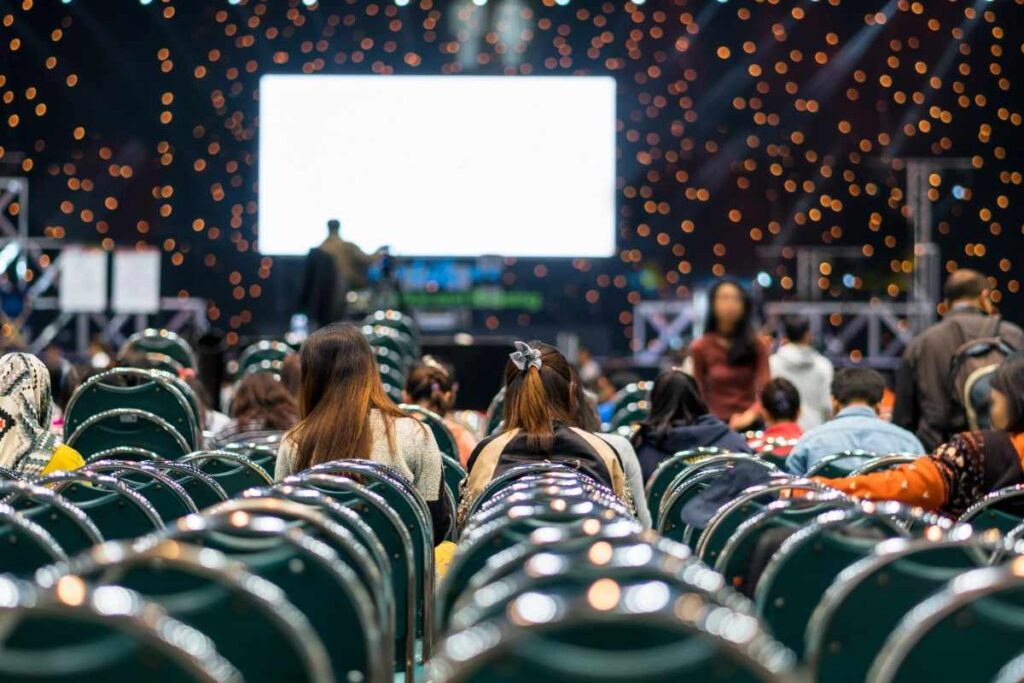
Corporate conferences prioritize clarity and reliability. Audio must be consistent across seating areas. Screens must be readable from all angles. Transitions between speakers and sessions should feel seamless.
Trade show environments require impact and flexibility. LED walls, interactive displays, and modular systems allow exhibitors to attract attention while adapting to booth constraints. AV systems must install quickly and operate continuously.
Outdoor and hybrid events require weather-rated equipment, portable power solutions, and streaming redundancy. Audio dispersion and screen visibility are constant challenges that must be addressed in planning.
At Willwork, audio-visual production is treated as part of the event build, not a separate layer added at the end. The focus is on execution. That means planning systems that work in real venues, installing them with skilled crews, and supporting them from load-in through teardown.
Our Audio- Visual services are built around creating dependable, show-ready environments through coordinated planning, experienced labor, and hands-on onsite oversight. Every decision is made with the full event environment in mind, not just the AV footprint.
Willwork supports audio-visual production by:
This integrated approach eliminates handoff gaps between teams and reduces last-minute risk. AV systems are not treated as standalone equipment packages. They are built, tested, and operated as part of a complete event environment that opens on time and performs as planned.
Audio-visual production shapes how events are experienced and remembered. Equipment alone does not ensure success. Results come from planning, skilled labor, and disciplined execution on site.
The integrated system approach to audio-visual production execution enables events to proceed smoothly while delivering precise messaging and maintaining complete control of potential risks. The AV industry functions through its operational procedures, which enable teams to develop reliable plans while executing their work without encountering unforeseen difficulties.
Willwork supports audio-visual production through execution-focused planning, experienced crews, and coordinated onsite delivery across corporate events, trade shows, and live environments.
Audio-visual production is the combination of the elements of sound, vision, lighting, and control to get the effective communication needed in live events.
AV industry refers to production, equipment, integration, and technical specialists who design and install the audiovisual systems used for events.
Planning ensures the system fits the environment, there is enough power, there are good sightlines, and rehearsals ensure no live failures.
Most failures are the fault of hasty planning, insufficient coordination, inadequate testing, and unclarified operation roles rather than the equipment.
Willwork offers highly trained labor, AV execution, and on-site coordination for the reliable performance of AV components.
Chelsea is the Marketing Director at Willwork, where she transforms strategy into stories that connect. With a sharp eye for detail and a passion for big-picture thinking, she leads brand growth through creative campaigns, powerful messaging, and industry presence. From concept to execution, Chelsea is focused on elevating Willwork’s voice and helping clients see what’s possible.